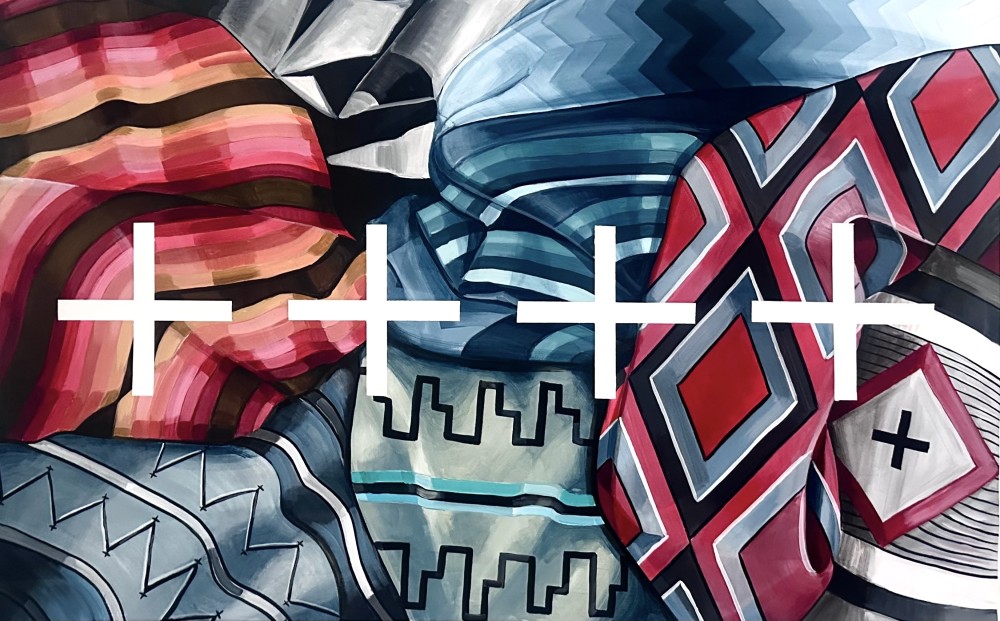
Nani Chacon: ... And I’ll say, it could be worse (reflections on light through dark times)
The crux of Nani Chacon’s new sculptures is the striking visual parallels between traditional depictions of Diné (Navajo) deities in sand paintings and the electrical towers used by coal refineries on the Navajo Nation. The images of gods are composed with ideas of completeness, beauty and sacredness, while the towers are utterly utilitarian, designed solely for precision and efficiency. Chacon speculates on how to transform an environmental blight into something positive. To shift perspective. In an imagined future where the towers no longer transmit power, no longer have an industrial purpose, what new function could they serve once they are relics. Can and should they be somehow reclaimed? How do we begin to reclaim landscape as the genesis for cultural understanding?
Three monumental versions of these towers are currently installed in the Whitney Biennial in New York. After the Biennial closes, one of the sculptures will be installed on the land of the Navajo Nation. Prior to its second installation radio broadcasting equipment will be added, broadcasting intentions stated by community members of the Navajo Nation for the future into the world.
In her new series of Bed Rot paintings, she reflects on the current heaviness of the world. Beds are meant to be places for rest, for sanctuary, but the adoption of new slang deflates this concept. The language introducing a notion that beds can also be a place to hide from the world as well, to deteriorate, to whither away and loose momentum. The beauty of the crumpled Diné blankets is right there, but so easy to overlook worrying about the seemingly insurmountable challenges out there. But, it is essential to pay attention to these details. To the good things.
A new neon piece is also included in this exhibition, fabricated with Lite Brite Neon Studio. “Náátsʼíilid Biyáázh” is the deity responsible for connecting earth and heavens. The name in this rendition translates into “Baby Rainbow” in English. Chacon envisions what a new depiction could look like in the modern world. The rainbow hues and twinkling stars emanate goodwill.
All three bodies of work use aspects of the past as anchors for stability now. As tools for optimism, to see cracks of light.
Nanibah “Nani” Chacon (b.1980) is a Diné and Chicana artist, most recognized as a painter and muralist. Chacon was born in Gallup, New Mexico and raised on the Navajo reservation and in New Mexico. She is currently based in Albuquerque, New Mexico. Chacon’s most notable works have been within the public arts sector, in which she has a cumulative experience of over twenty years. Her practice includes illustration, installation, and design. Chacon’s public works facilitate social engagement and community-based integration, elevating her personal philosophy that art should be accessible and a meaningful catalyst for social change.
A ten by ten foot painting by Chacon is currently installed at the Brooklyn Museum for three years. She has been involved with two murals installed at the entrance to PS1/MoMA in the last few yeas. She had a solo museum exhibition at Site Santa Fe not long ago. Other recent solo and group museum exhibitions featuring her work have been held at: Harwood Museum, Phoenix Art Museum, Denver Art Museum, El Museo, Tucson Museum of Art, Heard Museum, Judd Foundation in NY, Jackson Hole History Museum, Meridian International Center in DC, National Hispanic Cultural Center, University of Texas PB, Zimmerli Art Museum, Scottsdale Museum of Contemporary Art, Shelburne Museum, and more.
She was featured in the major publication An Indigenous Present, conceived by Jeffrey Gibson.
Notable Projects have been supported by; Creative Capital, National Endowment for the Arts, Obama Foundation, California Endowment for the Arts, US Consulate and Embassy in Russia, National Museum of Mexican Art, Navajo Nation Museum, National Hispanic Cultural Center, and others.
She illustrated the book Aaniin, I See Your Light, published by Harper Collins in 2025. She is currently illustrating a new book, to be published by Simon & Schuster.
Her first solo exhibition at Timothy Hawkinson Gallery was held in late 2023, from which the Whitney Museum of American Art acquired the large twelve foot wide centerpiece of the show.